|
THE PURSUIT OF WORLDLINESS A blog by Barry Edelson CRUEL JOKE 1: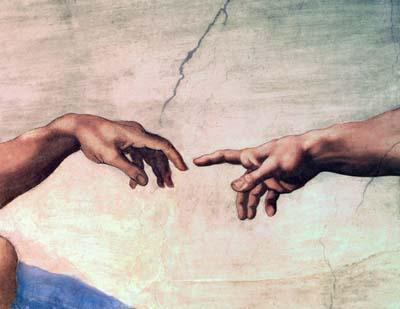
Life Has MeaningQUERIOUS Sorry I'm late. Weren't you delayed by that accident on your way here? ANTAGONĒ Accident? No, I came from the opposite direction. Was it bad? QUERIOUS If you measure from the number of police cars and ambulances, it looked quite serious. I suspect someone may have been killed. Tragic. ANTAGONĒ Why do you say that? QUERIOUS Isn't it tragic when people die in accidents? ANTAGONĒ Well, no, not in the classical sense of the word. It's awful, especially when there are young people involved, but it's not really tragic. That would imply a losing battle against the fateful forces of the universe. A car crash is exactly what the name suggests, an accident — a meaningless, random occurrence. QUERIOUS How can you be so calm and calculating about it? ANTAGONĒ I think you are confusing calmness with indifference. QUERIOUS Indifference? That's even worse. ANTAGONĒ Why? QUERIOUS That would imply that you care about no one and nothing, that you have no sympathy or compassion, which I know to be far from the truth. ANTAGONĒ I didn't mean to say I was indifferent to human suffering, just indifferent to the question of why things happen. At bottom I am utterly convinced that life is essentially meaningless. QUERIOUS You do realize that you have completely contradicted yourself? ANTAGONĒ It's not a contradiction, really, but a paradox. We are all wired, so to speak, to respond to life in certain ways. At the most basic level, we're designed for physical survival. We experience tension to help us avoid danger. If we — or at least our ancestors in the forest — weren't frightened and on edge all the time, they'd have been dead meat, literally. QUERIOUS But we don't live in the forest anymore. ANTAGONĒ In a sense, we certainly do. The highway is actually a good metaphor for the forest, a place we depend on for our survival but which is at the same time filled with potential dangers. QUERIOUS That's a very limited metaphor. Living in an actual forest is far more hazardous than high speed driving. Civilization has drastically reduced the risks of living. ANTAGONĒ That's exactly why we experience stress. Nature hasn't equipped us nearly so well for mental and emotional survival as for physical survival. When faced with difficult situations that are not life threatening, we can't help but react in the one way we are neurochemically programmed to react: with fear and suspicion and alertness for the enemy. Naturally, that leads to all manner of hatred and the forming of alliances to all kinds of groups and systems of belief. It's a way of building up strength with which to confront danger, whether real or imagined. Social organization isn't a by-product of human nature, it's a strategy for survival. QUERIOUS People organize for positive reasons as well as negative ones. ANTAGONĒ You've placed a value judgment on what I've been saying. Why do you assume that aggressive behavior, such as waging war, is inherently bad while peaceful behavior, such as forming a symphony orchestra, is essentially good? QUERIOUS Are you really suggesting that we're not better off making music than making war? ANTAGONĒ No, I'm saying that, considering man's behavior in its totality throughout the centuries, it is absurd to argue that people prefer the experience of art to the experience of war. They both represent highly sophisticated forms of social organization. And while I wouldn't argue that they serve the same purpose, they do both represent attempts to order the world in a particular way. Obviously, war is a more primitive way of deciding which side you're on, of defining one's identity, than taking part in aesthetic pursuits. But art, in its attempt to explore and explain life, is, in one respect, simply a more advanced version of the same impulse. The better we understand the world, the better we will be able to live in it, or so we presume. Likewise, the more thoroughly we vanquish the tribe living over there, the better we presume to be our own chances of survival. QUERIOUS Why do you say "presume" in both cases? ANTAGONĒ Because our judgment isn't infallible, and sometimes we wage war foolishly and sometimes we pursue art down a dead end. Philosophical dialogues like ours, for example, are particularly useless. Thinking about life is just another way of occupying ourselves while we're here. After all, survival is only temporary. In the end, nature always overtakes us. QUERIOUS When I mentioned positive human activities before, I wasn't actually thinking of art or philosophy as the opposite of aggression. I was thinking of love. ANTAGONĒ Well, again, love is a bond that is formed as a bulwark against calamity. Why else are we so thoroughly obsessed with the pursuit of it? QUERIOUS Because we have many complicated psychological and emotional needs, and love helps to satisfy them. It can't be just an instrument of survival. If anything, people in love often put themselves at risk of an untimely demise. Also, I don't think you can underestimate how important it is for us to enjoy the sensation of love. It makes life enjoyable, not just possible. ANTAGONĒ I'm not suggesting that love isn't a pleasurable emotion — let's forget for the moment that it can also be a painful or selfish emotion — but remember that comrades in arms also often love one another as they turn their sights on killing a hated enemy, and that even romantic love often drives people to acts of violence. You've just now alluded to those dangers. Think of crimes of passion; better yet, think of Helen of Troy. In its purest, ideal form, a love relationship is supposed to create a self-contained haven. But a haven against what? Against the ill fortunes of the world. The organization of men and women into couples is no different from the organization of animals into packs. The emotion, when everything works out, is a joy and we naturally prefer it to most other experiences. But it doesn't work out nearly as often as it fails. Perhaps that's why violent behavior is more common than affectionate behavior. QUERIOUS You mean to suggest that we make war because it's easy? ANTAGONĒ No, I am suggesting that both love and war depend on cooperation. That's the common denominator that makes it foolish to place, say, the love of a mother for a child above the love of a soldier for the dictator who commands him to fight. Both forms of love may, and often do, drive people to terrible extremes to defend the beloved object. But the love of a mother, which we idealize into something pure and noble, is a far less complex matter than the soldier's love. The one is inbred; without a mother's uncompromising attention, the infant simply doesn't survive. The overweening parent is one of nature's greatest success stories. In fact, one could make a good case for all human love deriving from a desire to reconstitute the mother's love in one's adult life; but that's another matter. The love of the soldier, on the other hand, must be carefully cultivated over the course of a lifetime. It's the result of a very complex, and by no means certain, ordering of social attitudes and behaviors. Whole institutions must be created to support it. The level of cooperation it takes to put an effective army out onto the field, or, for that matter, to put a gang out onto the street, is immeasurably greater than the cooperation it takes for a single man and woman to join forces and build a sturdy house to live in. QUERIOUS You are going around in circles. If the love between a man and a woman, or between parents and children, is easier to achieve than the love of a soldier for his country, why doesn't the one kind dominate the other? Why are wars always raging all over the world? ANTAGONĒ I didn't mean that the more abstract kind of love was easier to make, I meant that people can find fulfillment in it more easily. Look, once the vast social structure that we have is in place, life offers many opportunities for individuals to define and express themselves. A demagogue who says, "There's the enemy! Let's go get him!" offers an easier path to follow than a love song that says, "There's a woman! Go and get her!" It takes less understanding to act on one's hatred and pursue a destructive goal than it does to pursue a creative one, but it doesn't take any less cooperation. QUERIOUS Nevertheless, you maintain that neither destructive nor creative goals are of any significance. ANTAGONĒ True. QUERIOUS Then how is it that you can come to care about anything? ANTAGONĒ Because I have no choice. I have personal preferences, I have my own fears and, yes, hatreds, not to mention a whole catalogue of personal experience, all of which contribute to formulating the wiring in my brain that causes me to respond to life in my own particular way. Knowing on an intellectual level that such and such situation is essentially insignificant, that the earth is merely an aberrant oasis amidst the giant fireball of the universe, doesn't stop me from becoming frightened or angry or ecstatic, as the case may warrant. But by the same token, experiencing fear, anger or ecstasy doesn't imbue my life with any objective purpose. My "purpose" is the same as that of every living creature: to survive if possible, to reproduce if possible, and to die. My reactions are simply there to facilitate those ends. QUERIOUS If willfulness is no more than a manifestation of the survival instinct, you could say that a house plant has a will of its own. ANTAGONĒ Yes, you could. QUERIOUS But that would be somewhat absurd. ANTAGONĒ Yes, it would. QUERIOUS Doesn't that still leave room for a larger meaning to life? Just because a geranium doesn't understand the biological forces that enable it to survive doesn't mean that photosynthesis isn't happening. Likewise, just because you can't understand the reason you're made the way you are, doesn't mean there isn't a reason. ANTAGONĒ It doesn't prove there is, either. QUERIOUS Many people seem to think there is. ANTAGONĒ If you're talking about God . . . QUERIOUS I am. ANTAGONĒ I must say that the absence of understanding what God may be about is, as far as I'm concerned, identical to there being no God at all. How can I experience something that is by its essence unknowable? That's not a paradox; it's an outright contradiction. QUERIOUS Many people find God to be quite knowable; at least, they see God's hand in many things. ANTAGONĒ Is that what people really see? How do they know? Look, it's an ancient argument, and we could talk about it for days. Religious people ask, how can dumb nature produce all of these marvels on its own? Clearly there is some intelligence behind it all. But I must tell you that I have always found these arguments utterly unconvincing. You know, this belief in the deity is not very different from what I was saying earlier about survival. Man looks around him at a universe he doesn't understand and wonders what's behind it all. The purpose of his wondering isn't entirely idle — it actually helps him survive. Understanding the stars, the sun, the moon, the tides, the weather and all the physical forces that threaten him can help him to tame those forces or, at least, to learn to avoid them effectively. Being human, man then projects himself onto the universe. His next thought is, maybe somebody planned all of this, just the way we plan the crops and the hunting and the building of huts. So what form does this intelligence ultimately take in his mind? Why, isn't it remarkable that God ends up looking astonishingly like, well, you and me. The only reason the existence of God is clear to anyone is because most people are incapable of seeing the world through anything but their own eyes. In all of the religions that ever existed, in all their diversity, there is one thing in common: the deity is modeled precisely on man. A better version of man, to be sure: God is always wiser, nobler, stronger, more compassionate, immortal. But God is also, in some manifestations, vengeful, deceptive, angry and cruel. Who does that sound like? God is everything man is and then some. What a coincidence! We invented God, not the other way around. I can imagine nothing more obvious in this world. QUERIOUS You've ignored my point. Many people still see God quite clearly. Maybe there's something lacking in you. ANTAGONĒ Or in them. You know, I once had a teacher who held up his hand and said, how incredible that God could have created such a fantastic instrument as the human hand. I couldn't disagree that the human hand is an extraordinary work of engineering, but the idea that it is fantastic because God invented it left me cold. It shows a total lack of imagination. If a God of infinite capacity can make my hand, I wondered, surely he could make infinitely greater things than man, who is so thoroughly flawed, things that I couldn't begin to fathom. As far as I could see, man's significance was diminished, not enhanced, by believing in God. The human manifestations of God also demonstrate the same absence of imagination about what a truly perfect God would be like. The appearance of a Christ figure, of Mohammed or of the Buddha reveals exactly the opposite of what their respective faiths pretend. They reveal man as a limited creature who can't even imagine God without visual aids, without a body they can actually reach out and touch. The Judeo-Christian-Islamic God is supposed to be a great advance on the Greek notion of the gods, but man today is no more capable of believing in a God who doesn't look just like him than he was during antiquity. QUERIOUS You are trivializing a complex and compelling idea. In Christian ritual, this touching of God is quite literally played out in the communion. The fact that it's not some abstract notion is a positive attribute, not a drawback. These religions that you so casually denigrate say to their followers, God is so great, so powerful, so compassionate, that he's sent this emissary to guide us. The human-like form is merely the way in which God is manifest, the way His concern for us is demonstrated. It is how God is made real to our imperfect human senses. ANTAGONĒ How disappointing! Is that the best we can do? Frankly, I was expecting something, well, something I couldn't actually understand. QUERIOUS Then consider the corporeal manifestation of God as simply a metaphor for God, a metaphor that we can grasp since we aren't able to comprehend the real thing. ANTAGONĒ How many Christians believe Jesus is just a metaphor? If people didn't believe what it said in the Bible quite literally, it wouldn't have any hold on them. I mean, this idea of God coming to earth in the form of man is terribly clever and has been terribly effective, as well. Personal identification with God through God's human representative is obviously appealing on a very fundamental human level. But how does it differ from identification with the love of the mother or of the autocrat-general? It obviously doesn't, which is why we have such religious images as the Virgin Mother and Mohammed the warrior. We have simply superimposed superior versions of ourselves onto the idea of the deity. It's so obvious it's not even wrong. The advantages for survival in being part of a religious group are plain. Religion provides an even stronger glue than tribalism or nationalism. And like the army example I used before, it requires tremendous efforts of organization to pull it off. Think about how frequently the faithful are in fact likened to an army. Do you imagine this is a coincidence? It's simply how humans respond. People want to know, what's the reason for my suffering? Why is the world like this? Can it be better? The most common way to answer is, the reason we suffer is because of those people over there; if we get rid of them, by converting or killing them, everything will be better. QUERIOUS Wait a minute. All of the religions you mention teach something entirely different about why there is suffering in the world. The reason is that there is evil in the world — in nature, in our souls, in everything. We suffer not because of some other person's actions, but because of our own. Modern religions are a vast improvement over those of pagan antiquity for exactly this reason. They place responsibility for salvation firmly in our own hands. It's no longer blind fate that determines what happens to us, but our own actions, our own relative success in the struggle against evil. ANTAGONĒ Do you honestly believe that that car accident out there was caused by insufficient zeal in the war against Satan? The irony is that the true creed of monotheism is closer to my view of the world than to yours. It tacitly acknowledges that everything that happens in this world is really unimportant. The brilliance of organized religion is that it provides the illusion of answers to life's riddles without really addressing them. In other words, religion says, we don't even need to know the reason why; only God knows why. Nevertheless, God has given us this sign or that sign to follow, and if we do follow, either by love or by war, then life will be better. And what's more, wonder of wonders, you can even be immortal. So we've covered the major puzzles: religion tells you there's a reason why we're here (even though no one knows what it is), that we should reproduce to continue that existence (which works out nicely, since nature wouldn't have it any other way) and lays down a lovely tangle of rules to tell us how. As for the great mystery of death, well, don't worry about it because dying isn't really dying after all. QUERIOUS You can't even concede that it's possible that these signs you talk about really are left by a creator? ANTAGONĒ Your argument is a syllogism. If I can't possibly know where a sign came from, why would I assume that it came from a God of some man's imagining? It is just as logical to assume that God is the man in the moon. You can't disprove it, can you? I have no more basis for believing in the God you propose that you have for believing any other proposition I can make. It's sheer demagoguery. The fact that I don't understand everything there is to know about the universe doesn't prove the existence of God. If anything, I find man's notion of God to be a paltry explanation for much of anything. QUERIOUS So we're back at square one. You don't believe in anything. ANTAGONĒ I'll put it this way. If there is some force ordering the universe — and I concede there very well might be — it is so remote and disinterested in us that it might as well be nonexistent. If it is truly beyond my comprehension — unlike the conventional idea of God, which would be worthless to man if it really was beyond his comprehension — then it can offer me no understanding, no solace, no improved chances of survival. A meaning that is indiscernible is no meaning at all. Religion passes itself off as a glorious paradox by trying to make something tangible and clear out of something that is inherently vague and unknowable. It not only doesn't work, it can't work. QUERIOUS But you're wrong there. It has worked, quite brilliantly, for thousands of years. The reason most people find religion compelling isn't because it merely helps them to survive, but because it is true. ANTAGONĒ Then why isn't there only one religion, instead of the many which are constantly at war with one another? QUERIOUS Perhaps they're at war because man has yet to discover the true faith. Monotheism has been accepted the world over, which is a huge step forward. There may be a religious revelation still to come which will unify all these faiths. ANTAGONĒ Sort of like the grand unifying theory that nuclear physicists have been after for most of this century? QUERIOUS If you insist; it's a convenient analogy. ANTAGONĒ It's more than convenient; it's quite apt. Man will be no closer to understanding the universe if he comes up with his perfect formula of quantum mechanics than if he comes around to this worldwide revelation you speak of. He will only think he has, which is consistent with his unchanging nature. QUERIOUS I think I would find the world an unbearably cold place if I believed what you profess to believe. ANTAGONĒ And if I believed what you profess to believe, I would find it hideously cruel. I long ago came to the same conclusion that Philip Carey, the hero of Somerset Maugham's "Of Human Bondage", came to: if life is meaningless, then it is robbed of its cruelty. QUERIOUS Do you really believe that? ANTAGONĒ I admit that on the face of it, the opposite would seem to be true. QUERIOUS You're dangerously close to confessing to a religious feeling. ANTAGONĒ Heaven forbid. No, the meaning of that revelation, if you'll allow me the use of the word, is that only when God is added to the equation does life seem cruel. When you referred to that accident as a tragedy before, you were unwittingly falling into a Greek trap. If you subscribe to the ancients' notion of fate, then no misfortune can be deemed a tragedy unless it couldn't have turned out otherwise. The fates and man's own nature must conspire to reach an unavoidable end. You cannot possible say that about a car accident. If you believe in God, then you implicitly believe that God could have prevented the accident, in which case we are left to ponder how God can be so cruel as to allow such terrible things to happen. But if you believe in the random collision of material objects, then there is neither fate nor cruelty, only sadness, a sadness derived entirely from the naturally occurring sympathy of our humanity. That, too, is a group survival strategy. QUERIOUS You are presuming to understand God's motives. That is foolish, not to mention arrogant. ANTAGONĒ Arrogant? Me? I'm not the one who has presumed to put words into God's mouth since the beginning of recorded history. An endless parade of prophets, saints and lesser orders of charlatans have been doing that for thousands of years. They're the ones who have been filling men's heads for generations with false hopes and expectations. I presume nothing, least of all to understand the unfathomable universe. QUERIOUS So you find no comfort in man's ability even to imagine that there is a meaning to life? Even if that meaning falls short of real understanding? ANTAGONĒ On the contrary, I despair of it. QUERIOUS How does your despair correspond to your calmness? ANTAGONĒ Consider it my personal survival strategy. posted October 2007 Return to home page • Send an e-mail All writings on this site are copyrighted by Barry Edelson. Reprinting by permission only. |